
ISO 484/2 Class S: Why "Standard" Repair Isn't Enough
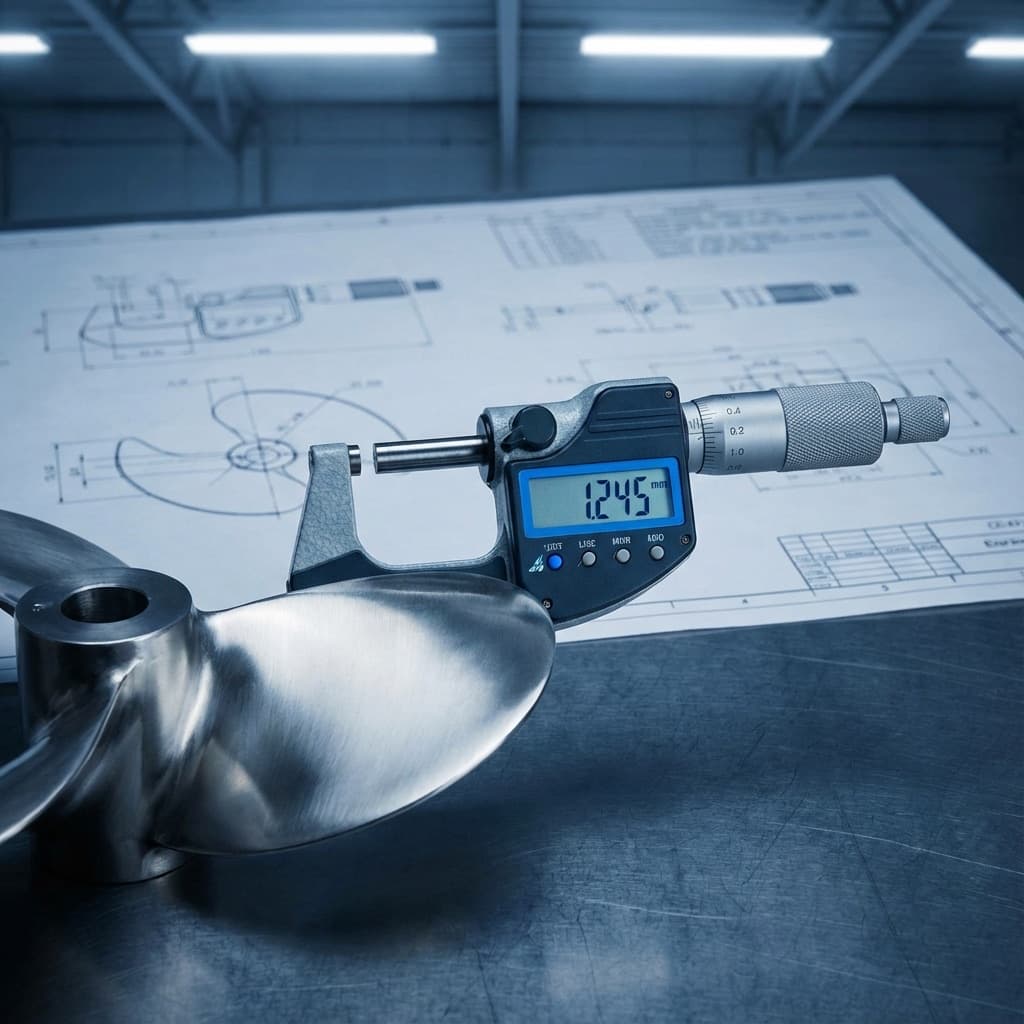
Most shops repair to Class I or II. Discover why Class S (Very High Accuracy) is critical for fuel economy and vibration elimination.
The ISO 484/2 Standard Explained
When you send a propeller for repair, what tolerances are they using? The International Organization for Standardization (ISO) defined ISO 484/2 to categorize propeller manufacturing and repair accuracy for propellers between 0.80m and 2.50m diameter.
The Four Classes
- Class S (Very High Accuracy): Used for high-speed vessels and noise-sensitive applications. Pitch tolerance of ±0.5% to ±1.5%.
- Class I (High Accuracy): Standard for naval vessels and high-performance craft. Pitch tolerance of ±0.75% to ±2%.
- Class II (Medium Accuracy): General commercial vessels.
- Class III (Wide Tolerance): Basic utility craft.
Our Commitment: Class S
At our shop, we use digital analysis to achieve Class S tolerances. This means your pitch is verified to be within strict limits across all radii (0.4R to 0.95R). The result? A prop that performs better than many "box stock" factory propellers.